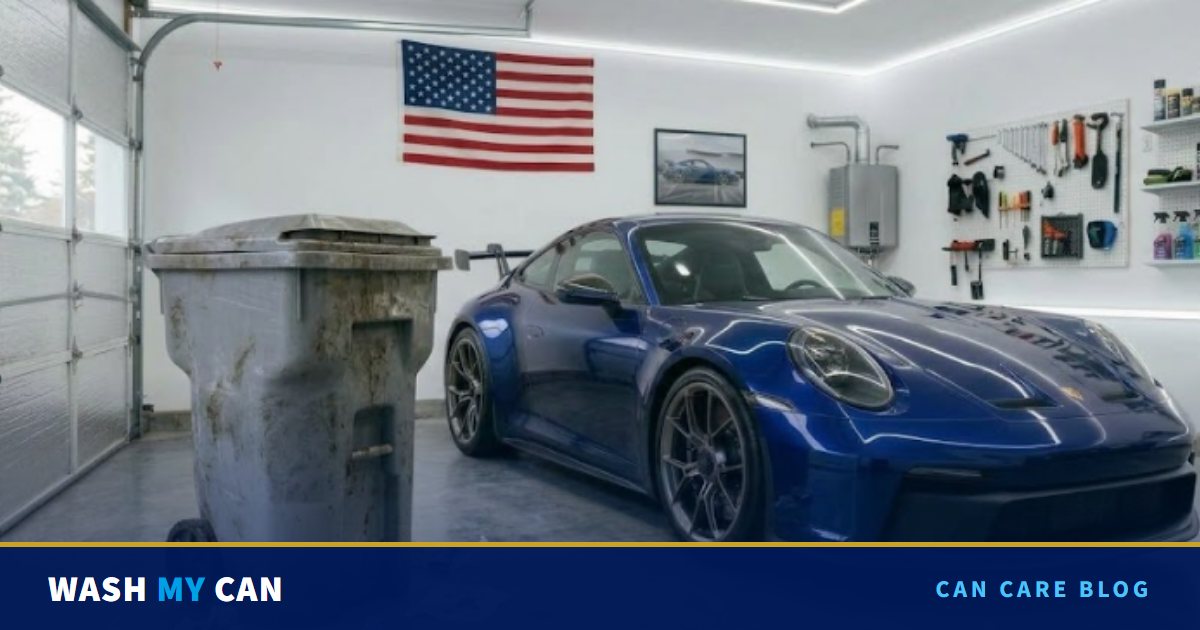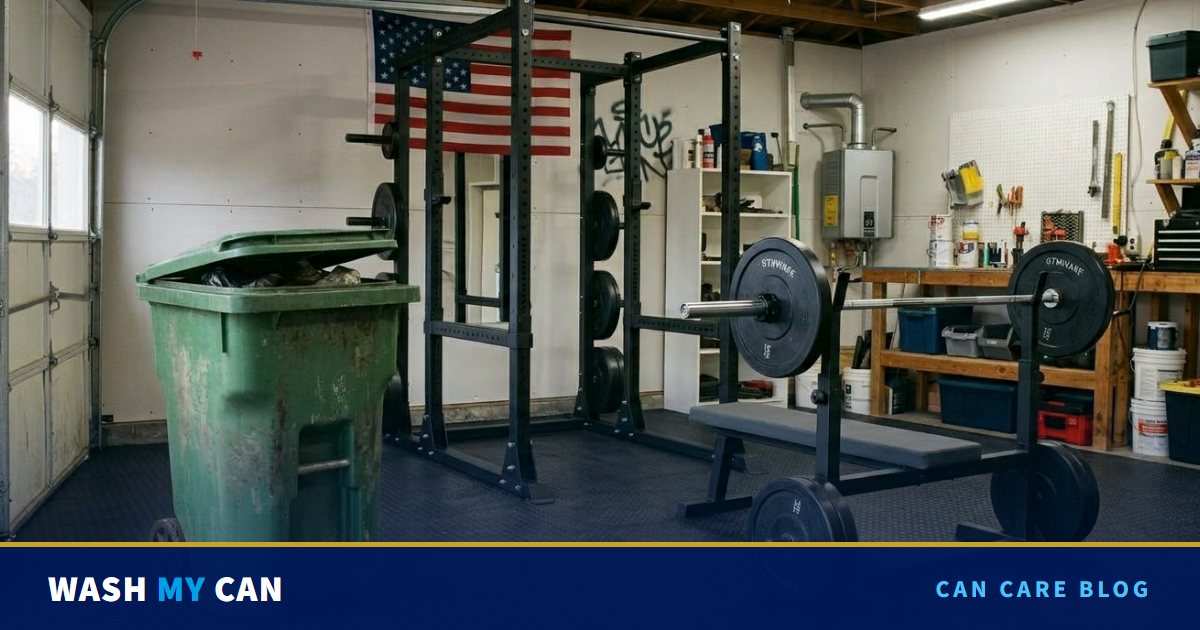
The box says WEDDING in your mother's handwriting. You slide it off the garage shelf, lift the lid, and the first thing that greets you is not lace or old perfume. It is a smell. Musty, a little sour, with something sweet and rotten underneath that you cannot quite place until you turn around and see the trash can sitting three feet away.
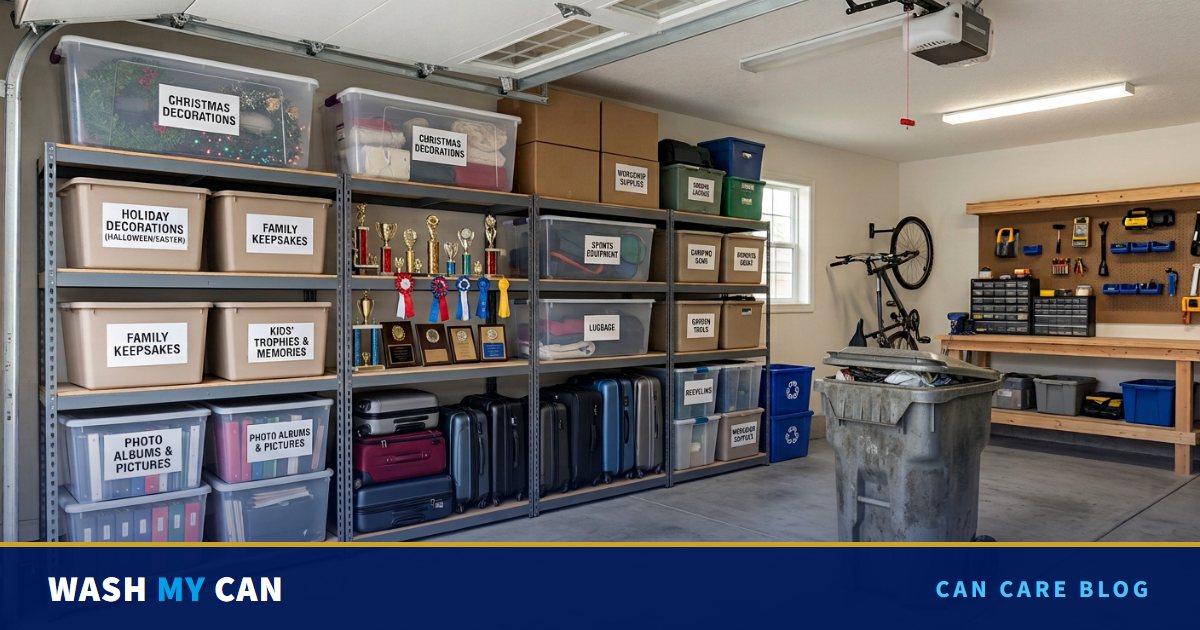
Some things in your garage can be replaced. A cooler. A bag of potting soil. The extra paper towels. Other things cannot: the photo albums from before anyone had a phone, the quilt your grandmother stitched, the baby clothes, the letters, the rocking chair that has been in the family longer than you have. Many of us store them in the garage because that is where the space is. And many of us store them right next to the dirtiest object we own.
Why a dirty trash can is bad news for garage storage
A garage is a closed box that gets hot and humid, especially in Palm Beach County, where the air can feel damp most of the year. Put a trash can in that box and you have added a steady supply of food, moisture and smell.
Tip the can toward the light and look at the bottom. A brown puddle of garbage juice that never fully dries. A greasy ring where a bag leaked. Black and green speckles of mold creeping up the corners. Run a finger along the inside wall and it comes away slick and tacky, like the skin on old soup. That film is where bacteria and mold live and feed. Under ideal conditions, bacteria such as E. coli can double about every 20 minutes, and in warm weather mold can spread across damp, food stained plastic quickly.
Now listen. On a hot afternoon you may hear the low drone of flies circling the lid, and on a bad week, the faint wet rustle of maggots moving in the muck at the bottom. Breathe in near the can and the smell is thick enough that you can almost taste it, a sour, metallic tang at the back of your throat. That same air is drifting across every shelf in the garage.
Cardboard, paper and fabric soak it all up
Here is the part most people do not think about. Cardboard, paper and fabric are porous. They can absorb odor and moisture from the air around them, and they hold on to it. That is why a box that has sat in a stinky garage for a season can smell stale the moment you open it, and why the smell can cling to whatever is inside.
Moisture is the bigger worry. Mold can damage paper and textiles, leaving fuzzy spots, stains and a musty smell that is hard to get out. Old photographs can stick together or spot when they stay damp. Wooden furniture can swell, warp or grow mildew when the air around it stays humid. A dirty can does not cause all garage humidity, but a can full of rotting, wet residue adds moisture and mold spores to a room that already struggles to stay dry.
Pests follow the smell, and they chew
Food odor travels, and pests follow it. Mice and rats can be drawn in by the smell of a dirty can, and once they are in the garage, a stack of boxes makes a quiet, sheltered place to settle. Rodents may chew stored fabric and paper to build nests, and droppings and urine can stain and taint whatever they touch. Silverfish are drawn to damp spaces and feed on paper, glue and starchy materials, which puts old books, letters and photo albums on the menu.
Picture opening that wedding box and finding the edge of the dress shredded into a nest, or flipping through an album and seeing pages peppered with tiny holes. Not every garage will see this. But a dirty can makes it more likely, not less.
How to protect items stored in your garage
A few habits go a long way. Move keepsakes into sealed plastic storage totes instead of cardboard boxes. Keep them up on shelves, off the concrete floor, where moisture can wick up. Give the trash can its own corner, as far from your stored items as possible, or keep it outside if your HOA and your space allow. Bag garbage tightly, double bag anything wet or meaty, and keep the lid closed. And never roll a freshly hosed can back into a closed garage while water is still pooled in the bottom.
Those steps help, but they do not fix the real problem. Plastic totes protect what is inside them, not the air in the room. The dirty can is still the source, and a garden hose rinse only moves the grime around. It does not sanitize. Baking soda and air fresheners can mask the smell for a day while the film underneath keeps feeding bacteria, mold and pests.
Stop the smell and the mold at the source
That is where we come in. Wash My Can is a family owned, curbside trash can cleaning service in Palm Beach County. After your trash is collected, our state of the art cleaning trailer pulls up and blasts your can with 200 degree high-pressure hot water. The heat and pressure strip off the greasy ring, the slime and the mold, and then we sanitize, disinfect and deodorize the can inside and out with eco friendly products. Our wash kills bacteria and disease-causing germs, along with the mold that has made itself at home in the corners.
The nastiest part, the gray water from inside your can that carries the food juice, grease, slime and bacteria, is collected right into the wastewater holding tank on our trailer. You do not need to be home, and you do not need to touch a thing. We roll the can back to where you keep it, and the next time you open the garage door, the only smell waiting for you should be your garage.
Your memories deserve better than sharing a room with a rotting can. Plans start at $25 a month for regular cleanings, with 2 cans included and $10 for each extra can, or book a one-time cleaning for $65. See our residential trash can cleaning plans and join our launch list today so your keepsakes stay as clean as the day you packed them away.
Keep the memories, lose the garbage smell
Our 200 degree hot-water wash kills odor-causing bacteria and mold right at the source, so your garage stays fresh. Plans start at $25 a month, 2 cans included, no contract.