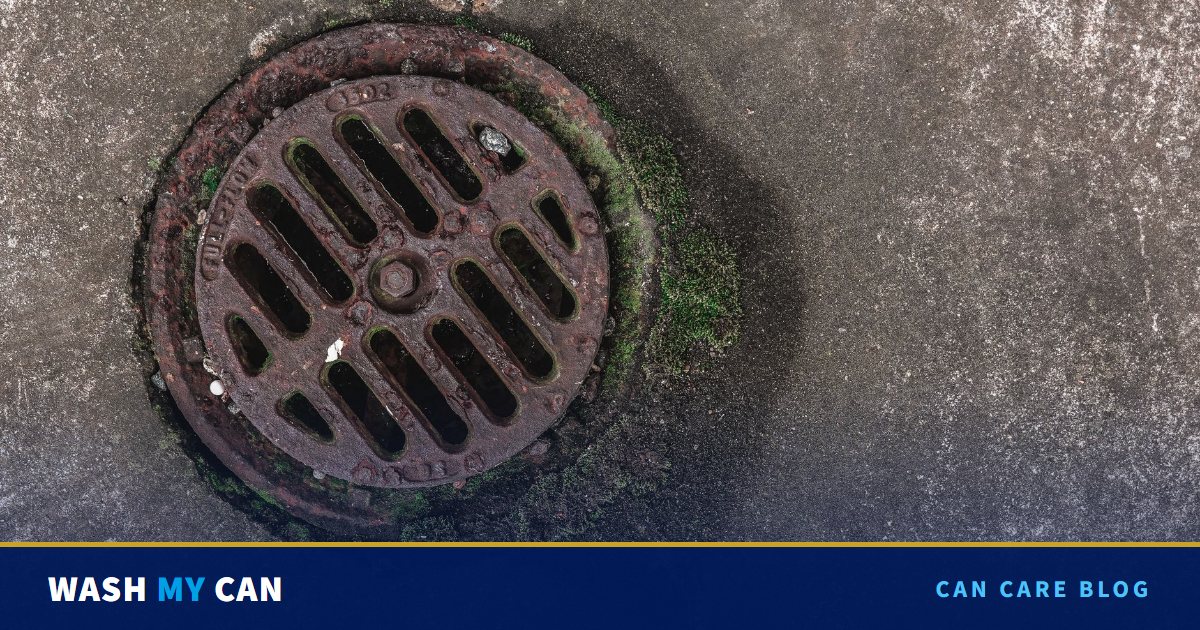
Photo by Magda Ehlers on Pexels
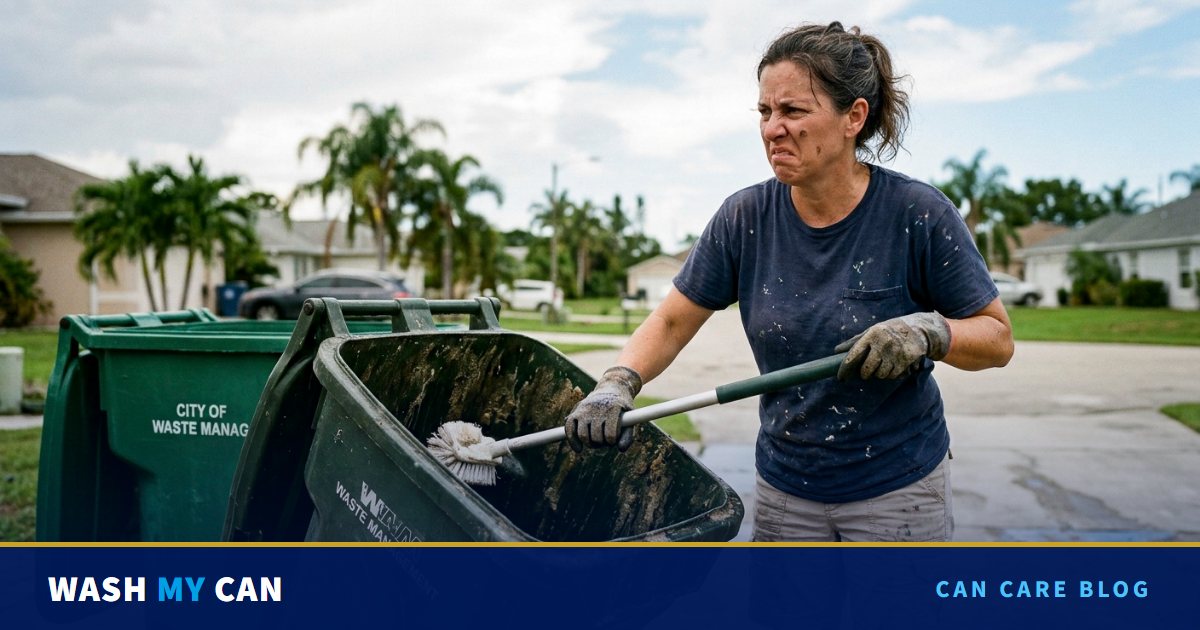
Follow the water. Tip a dirty can on its side, squeeze the hose, and watch what comes out. It is not clear. It is a gray, cloudy stream with a greasy shine on top, little flecks of food riding along in it, and a smell that rises off the warm concrete like a wet garbage truck. It slides down the driveway, pools against the curb for a moment, then finds the gutter and keeps going.
Most people never think about where that stream ends up. They are focused on the can. But the water that leaves your can carries everything that was living in it, and on a Florida afternoon that is a lot.
What is really in trash can rinse water
Think about what sits in the bottom of a can between pickups. Meat juice from a leaky tray. Spoiled milk. Grease from takeout boxes. Coffee grounds, fruit peels, soda syrup and the dark, sour liquid that collects under the bags. In warm, humid weather that mix can feed bacteria, mold and flies. Bacteria such as E. coli can double about every 20 minutes under ideal conditions, and a closed can baking at the curb can get warm and damp enough to help them along.
When you rinse the can, all of that goes into the water. Stand over it and you smell it first, a heavy, sweet rot with a sharp ammonia edge that you can almost taste, sour and metallic at the back of your throat. You hear the slosh and gurgle as the brown water pours out of the can. Flies drift down to the wet patch with a low buzz. The concrete feels slick under your sandals, and when it dries, you can see the dull, dark stain it leaves behind, the outline of a mess that is still there, just spread out.
Where driveway runoff goes in Palm Beach County
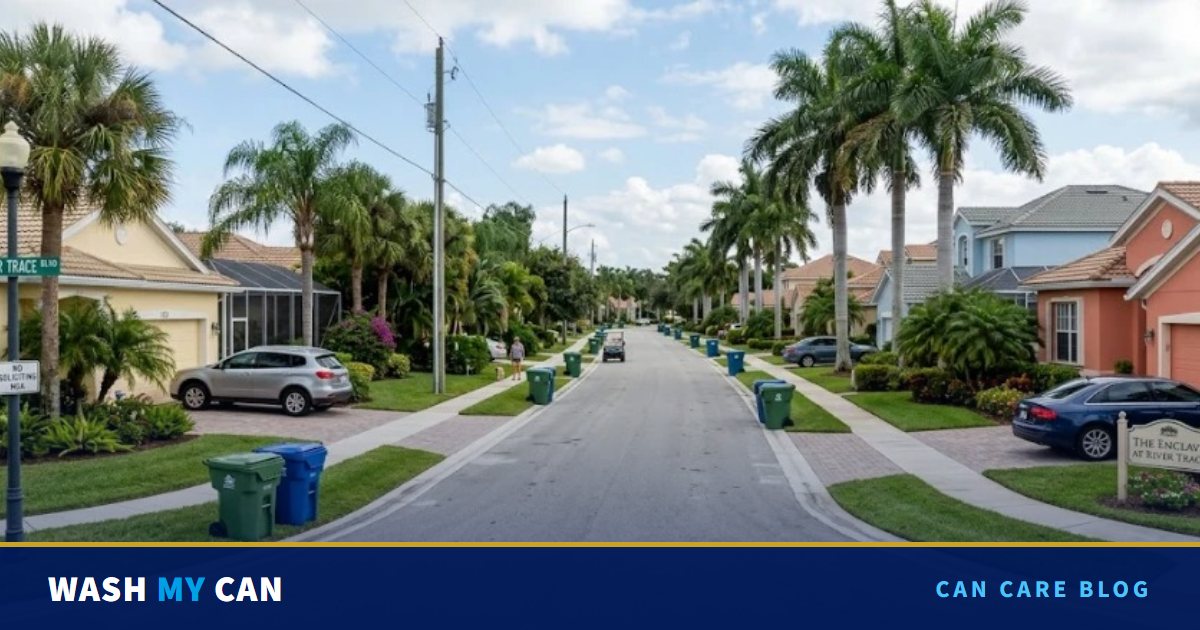
Water that runs down a driveway does not disappear. Some of it soaks into the grass and the soil next to the driveway. Some of it dries on the concrete and bakes there in the sun, which is why that patch can smell sour again on the next hot day. The rest heads for the gutter and the storm drain at the end of the street.
In many Florida neighborhoods, storm drains carry rainwater toward canals, lakes, ponds and coastal waters rather than to a treatment plant. They are built for rain, not for garbage water. That is why it makes sense to keep greasy, food-filled rinse water, and any cleaner you mixed into it, out of them. Palm Beach County is surrounded by water we all enjoy, and the storm drain in front of your house is part of that same system.
Why hosing out a can is not the green option
Doing it yourself feels like the simple, low impact choice. But a garden hose uses a lot of water to do a little work. Cold water does not cut through the greasy film stuck to the walls and floor, so people tend to run the hose longer, add more soap or bleach, and rinse again. A hose rinse moves the mess around, it does not sanitize the can. You end up with a damp can that still smells, plus a driveway, a lawn edge and a gutter that now smell too.
What eco friendly trash can cleaning looks like
Green power washing is not about using less effort. It is about cleaning the can properly and keeping the dirtiest water out of the street. That is how Wash My Can works, and it is the reason we built our service around a state of the art cleaning trailer.
We come by after your trash has been collected, so the can is already empty. Our trailer blasts every can inside and out with 200 degree high-pressure hot water. The heat and pressure lift the grease, crust and slick film that a garden hose leaves behind, so we can clean, sanitize and disinfect your can, and our wash kills bacteria and disease-causing germs. Then we deodorize it with eco-friendly products, so the can smells fresh without a cloud of harsh chemical fumes.
Here is the part that matters most for your street: the true gray water comes from the inside of the can, where the food juice, grease, slime and bacteria live, and all of that interior wastewater is collected in our trailer's wastewater holding tank. That is the gray, greasy water that would otherwise run down your driveway, and it never gets the chance. We also give the outside of your can a spray to clean the lid, handle and sides. That exterior rinse is not collected in the tank, but it is not where the garbage water comes from. The nasty stuff from inside the can stays with us.
You do not need to be home, and we put your can back where you keep it. It is a cleaner can for you and a cleaner neighborhood for everyone downstream.
Keep your can clean and your street clean
Plans are simple: Monthly for $25, Bi-Monthly for $35 and Quarterly for $45, our most popular plan. Want to try it once? A one-time trash can cleaning is $65. Every plan includes 2 cans, with $10 for each additional can, and there is no contract. Read more about our residential trash can cleaning, and if you manage an HOA, a restaurant or a property with dumpsters, ask about commercial dumpster cleaning.
Put the hose away and keep the garbage water out of the gutter. Join the Wash My Can launch list today, or call us at 561-414-8682, and let our trailer clean your cans and collect the dirty gray water from inside them.
The dirtiest water from your can goes in our tank, not the gutter
We sanitize your cans with 200 degree high-pressure hot water and collect the dirty gray water from inside each can in our holding tank. Plans from a month, 2 cans included, no contract.