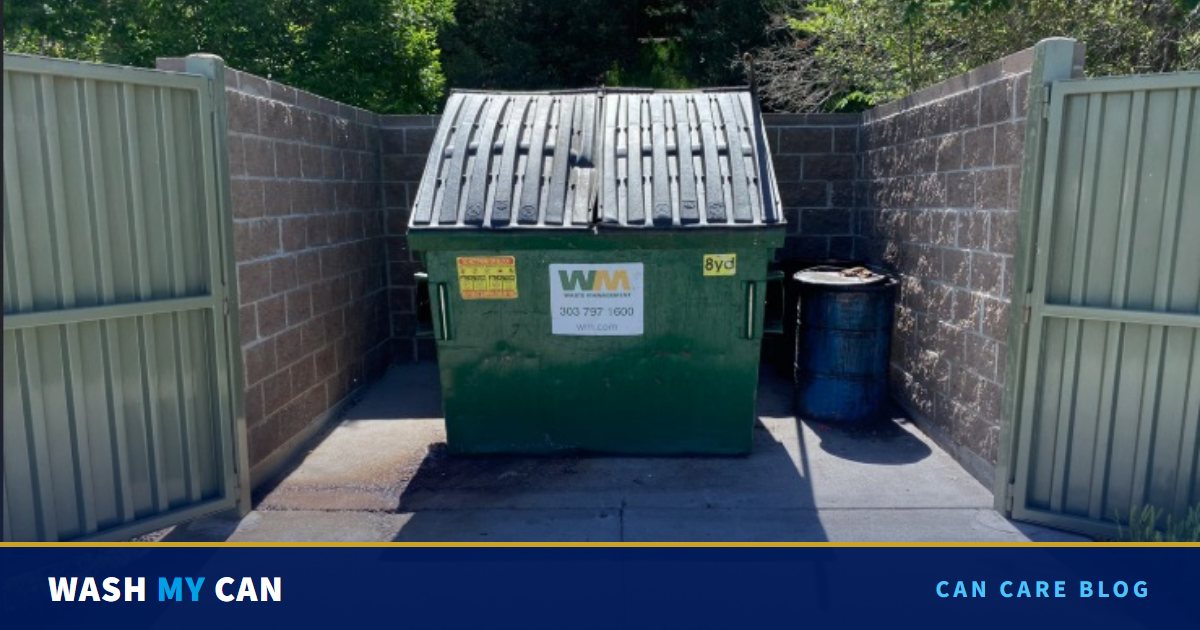
Your employee props the back door open with a milk crate, walks the kitchen bags out to the enclosure and swings open the metal gate. The hinge squeals. Then the air changes. It is thick, warm and sour, like spoiled milk poured over old fryer oil, and it lands on the back of the tongue with a bitter, metallic taste that lingers long after the gate closes. Under the lid, something rustles. A cloud of flies lifts off the rim with a low, angry hum.
Look down and the concrete pad tells the rest of the story. A dark stain fans out from under the front of the dumpster where garbage juice has dripped and dried, again and again, for months. Step on the edge of it and your shoe sticks for half a second with a tacky little peel. Touch the lid handle and it is slick with a film you would never allow inside your building. That stain, that smell and that buzz are what your staff, your tenants and sometimes your customers walk past every single day.
Why commercial dumpsters get so nasty so fast
A commercial dumpster is not a home trash can. It holds more waste, it gets opened far more often, and it may sit for days between pickups in full Palm Beach County sun. Food scraps, grease, coffee grounds, wet cardboard and leaking bags settle into the corners and soak into the floor of the container. In warm weather, that mix is close to ideal for bacteria, mold and flies.
Bacteria such as E. coli can double about every 20 minutes under ideal conditions, so a sticky film that looks small on a Monday can be a thriving colony by Friday. A single house fly can lay up to about 150 eggs at a time, and in warm weather those eggs can hatch in roughly a day. Within about a week, a new generation of flies may be crawling out of the corners of your enclosure, and flies can carry bacteria on their legs and bodies from the dumpster to your loading door, your patio tables and your parking lot.
The pad matters as much as the container. Grease and leachate that drip onto the concrete do not disappear when the truck empties the dumpster. They bake in the sun, soak into the surface and keep giving off that sweet, rotten smell long after the dumpster itself has been emptied. A pad that looks dark and blotchy can also draw roaches, rats and other pests looking for an easy meal.
How often should a commercial dumpster be power washed?
There is no single number that fits every property, but the answer usually comes down to three things: what goes into the dumpster, how hot it gets, and how often it is emptied. Here is a simple way to think about it.
Restaurants, cafes, bakeries, grocery stores and any business that throws away food or grease: these dumpsters tend to get the worst odors and the most flies. Many food businesses choose a monthly wash at minimum, and some may want it more often during the hottest months of the year.
Apartments, condos and HOA common areas: shared dumpsters and compactors collect household food waste from many units at once, and residents notice the smell walking to their cars. A monthly schedule is a common choice, with extra visits after holidays or move out weekends if the enclosure gets heavy use.
Offices, retail shops, medical offices and light commercial properties: if your waste is mostly paper, packaging and breakroom trash, a monthly or every other month schedule may be enough to keep odor and stains under control. The breakroom lunch scraps are usually what start the smell.
Whatever your business, a few warning signs mean it is time to wash sooner: you can smell the enclosure from the parking lot, flies follow you to the back door, the pad has a dark stain that keeps spreading, or the lid handle feels slick or sticky when you grab it.
Why a hose and a bucket do not solve it
It is tempting to have someone hit the dumpster with a garden hose after close. Cold water mostly moves the mess around. It loosens a little of the surface grime, spreads the rest across the pad, and leaves the greasy film on the walls and floor of the container where bacteria keep growing. An hour later, the smell is back, and now the enclosure is damp too.
How Wash My Can cleans your dumpster, pad and compactor
Wash My Can brings a state of the art cleaning trailer straight to your property. We clean, sanitize and disinfect your dumpster, bulk cans and trash compactor with 200 degree high-pressure hot water that cuts through baked on grease and kills bacteria and disease-causing germs, not just the dirt you can see. We also deodorize, so the sour smell is replaced with clean air instead of a perfume that fades by lunch.
The dirtiest water comes from inside the container: the food juice, grease, slime and bacteria that collect at the bottom. That gray water from the interior is collected in our trailer's wastewater holding tank. We use eco-friendly products, and we work on a recurring schedule built around your property, so the enclosure stays clean week after week instead of getting a once a year scrub.
We serve restaurants, HOAs and gated communities, apartments and condominiums, property managers, hotels, offices and more across Palm Beach County. Every property is different, so commercial pricing is custom, based on how many dumpsters, compactors and cans you have and how often you want service. Learn more on our commercial dumpster cleaning page.
Ready to make the back of your building look as good as the front? Call us at 561-414-8682 or join our launch list, choose HOA/Commercial, and tell us about your property. We will put together a custom cleaning schedule and quote for your dumpster, dumpster pad and trash compactor.
Make your dumpster pad the cleanest spot behind the building
We power wash, sanitize and deodorize dumpsters, pads and compactors with 200 degree hot water on a recurring schedule. Contact us for a custom commercial quote.