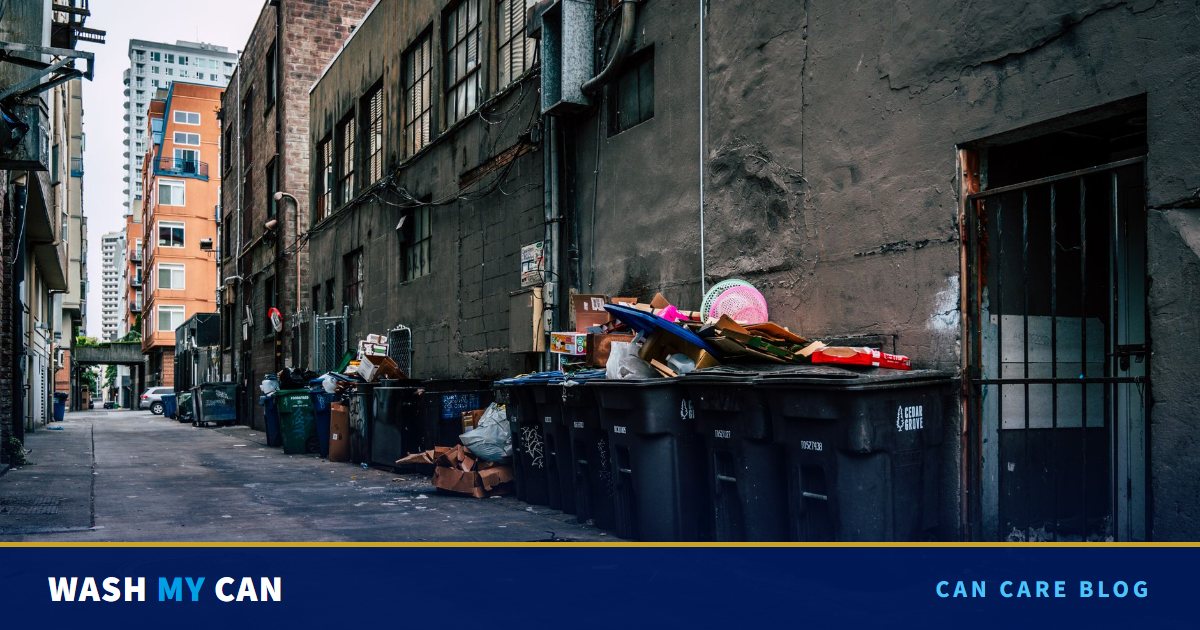
Monday, six in the morning. You unlock the back door, carry out the first bag of the day and stop at the edge of the enclosure. Someone has been here. A stained mattress leans against the block wall. A broken office chair sits on its side in a puddle. The lid of your dumpster is propped open on a heap of bags you have never seen before, and one of them has split down the side, leaking something brown across the pad. Flies lift off it with a low, angry buzz. The air smells like sour milk and wet cardboard, so thick you can almost taste it, a flat, rotten film on the back of your tongue. You paid for that dumpster. Somebody else filled it.
Illegal dumping is one of the most frustrating problems a business owner, property manager or HOA board can face. It costs you space, it can cost you extra hauling, and it turns a tidy back lot into the kind of place that attracts even more of it.
Why your dumpster gets targeted
People who dump illegally are usually looking for three things: a container they can reach quickly, a spot where nobody will see them, and a place that already looks neglected. An unlocked dumpster in a dark corner of a parking lot checks every box.
That last point matters more than most owners think. A dumpster pad covered in old stains, loose trash and overflowing bags sends a message: nobody is watching this spot and nobody cares what happens here. A clean, well lit, closed enclosure sends the opposite message.
What gets left behind, and what it attracts
Dumped trash is rarely tidy trash. It is torn bags of household garbage, rotting food, soaked cardboard, old furniture and sometimes things that should never go in a commercial dumpster at all. When it sits in the Florida heat, it gets worse by the hour.
Run your hand along the lid where those strangers grabbed it and you feel a tacky, greasy coating that clings to your fingers. Look down into the corners and you may see pale maggots curling in the wet folds of a split bag. Listen and you hear the rustle of something moving under the pile after dark. Bacteria such as E. coli can double in as little as about 20 minutes in warm conditions, and a house fly can lay up to about 150 eggs at a time, with eggs that can hatch in less than a day in warm weather. Food waste dumped on a Friday night can be crawling by Monday morning.
Rats, roaches and raccoons notice too. Garbage can give pests food, water and shelter all in one place, and a pile of strangers' trash around your enclosure is an open invitation.
Simple ways to deter illegal dumping
Light it up. A dark enclosure is the first thing illegal dumpers look for. Bright, motion activated lighting over the dumpster pad makes people feel seen, and that alone can send many of them somewhere else.
Lock the lids or the gate. Locking dumpster lids, a locking bar or a gated enclosure with a lock keeps strangers from using your container. Ask your hauler about lid locks, and make sure your staff and the collection driver know how to open them.
Post clear signs. A simple sign that the dumpster is private, for tenant or business use only, and that the area is monitored can make people think twice. Keep the wording factual, and only say the area is monitored if it truly is.
Add a camera where it makes sense. A visible camera pointed at the enclosure can discourage dumping and can help if you ever need to report it. Keep in mind that dumping on someone else's property without permission is generally against the law, and your city or county code enforcement office can tell you how to report it in your area.
Keep it full only of your own trash. Schedule pickups so the container is not overflowing, because an open lid on a heaping dumpster looks like a free for all.
Keep the enclosure clean. This is the one most people skip, and it may be the one that matters most. A spotless, odor free pad looks cared for. A grimy, sticky pad with a cloud of flies looks abandoned.
How Wash My Can keeps your enclosure looking cared for
Wash My Can pulls up with a state of the art cleaning trailer and gets to work on the parts of your property nobody wants to touch. We clean, sanitize and disinfect your dumpsters, compactors and bulk cans with 200 degree high-pressure hot water that cuts through baked on grease and kills bacteria and disease-causing germs. We deodorize as we go, and we power wash the pad so the dark, sticky stains come up off the concrete.
The nastiest water on your lot is the gray water that collects inside the container: food juice, grease, slime and bacteria. That interior gray water is collected in our trailer's wastewater holding tank. We use eco-friendly products, and we come back on a recurring schedule, early in the morning or after close, so your enclosure keeps looking like someone is paying attention.
We work with restaurants, shopping centers, offices, hotels, apartment communities, HOAs and property managers across Palm Beach County. Commercial pricing is custom, based on how many containers you have and how often you want them cleaned. You can see what is included on our commercial dumpster and compactor cleaning page.
Pair good lighting and a lock with a dumpster that looks cared for, and you give illegal dumpers one more reason to drive past your property. Call us at 561-414-8682 or join our launch list, pick HOA/Commercial, and tell us about your site. We will put together a cleaning schedule and a custom quote.
Sources
- USDA Food Safety and Inspection Service: Danger Zone (40°F - 140°F): Bacteria can grow most rapidly between 40°F and 140°F, and in that range they can double in number in as little as 20 minutes.
- University of Florida Entomology and Nematology: House fly (Musca domestica): Females can lay batches of about 75 to 150 eggs, larvae may hatch within 8 to 20 hours, and in warm summer months the life cycle can finish in 7 to 10 days. Kitchen waste is listed among preferred breeding sites.
- UF/IFAS Extension Manatee County: Talking Trash, Rodent Prevention: Garbage can give rodents food, water and shelter in one place, and cleaning cans at least monthly, more often in warm weather, may help reduce the odors and food residue that attract pests.
Make your enclosure the last place anyone wants to dump trash
We sanitize dumpsters, compactors and pads with 200 degree hot water and collect the gray water from inside the container in our holding tank. Contact us for a custom quote.